

We recently got back from FS/TEC, where our team spent a few days talking restaurants, catching sessions, and seeing what’s new in restaurant tech.
We came back with a few things we wanted to dig into a little more. One state-of-the-industry presentation in particular gave us plenty to talk about.
We caught up with Rob Green, our VP of Revenue, afterward to hear what stood out to him, and what he was hearing from operators on the floor.
“Honestly, operators are still talking about the same things they did last year,” Rob said.
(For anyone who missed our MURTEC recap six months ago, operators were asking whether AI could spot a pickle that shouldn’t be on a sandwich. They wanted more precise visibility into what was happening in their restaurant. A big theme was that the capabilities they wanted weren’t widely available yet, and wouldn’t be for a long while.)
At FS/TEC, Rob heard that same appetite for useful data, with operators focused on improving throughput and execution. We wanted to take a closer look at that, alongside the bigger industry picture being discussed on stage.
So, How Are Restaurants Doing?
Technomic, Inc.’s Richard Shank gave us plenty to chew on in the state-of-the-industry session. A few takeaways:
Eating out is getting harder to afford. Restaurant prices have been rising faster than wages and overall inflation. (We heard versions of this all weekend.)
The growth numbers need a closer look. The 2026 forecast showed 4.3% industry growth, but just 0.7% after adjusting for inflation.
Some categories have more momentum. Limited-service coffee cafés, Asian/noodle, Mexican, and chicken concepts had stronger sales growth forecasts. Pizza was forecast to decline. (We’ve been watching this closely all year.)
There are pockets of geographic growth, too. Markets in the Mountain region and Southeast stood out in the presentation.
We’ve been sitting on that second point. A bigger sales number looks good, but if much of the increase comes from inflationary price increases, it doesn’t necessarily mean the restaurant is getting busier.
And then there’s the question of who restaurants are competing with. Rob noticed speakers talking more about gas stations going after the same “meal moment” as QSRs. We’ve covered that before, and it makes sense. Someone stopping for gas might leave with lunch, too. One less stop is a pretty decent sales pitch.
So there’s growth to pursue, but customers are watching their spending and have plenty of options. We wanted to hear how that lined up with Rob’s conversations on the floor.
What Operators Were Talking About
Rob’s answer was straightforward: operators were focused on “increasing throughput by using data to refine operational execution.”
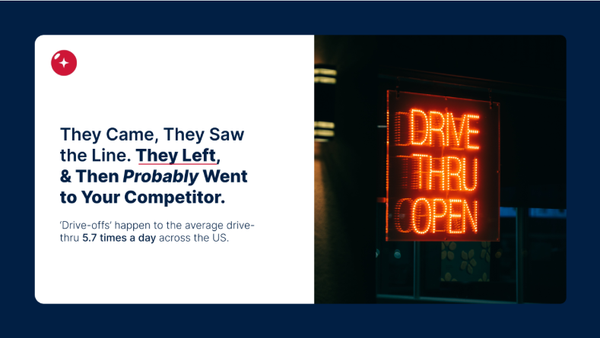
Or in simpler terms: using data to figure out what’s slowing the restaurant down, then changing how the team works so they can serve more customers in the same amount of time. You can see why. When winning a visit takes work, you want to make the most of it. You don’t want a customer pulling into the drive-thru, looking at the line, and deciding lunch can happen somewhere else.
That brings the conversation down to things a team can actually work on. Where is the wait building? What keeps slowing service down? Why does one location get through a rush while another struggles?
It also gives some context to Rob’s comment that operators are still talking about the same things they did last year. These aren’t problems that disappear because a new batch of technology arrives at the conference.
For us, the useful part is being able to go from “lunch was rough” to understanding where things got held up. That gives the team something specific to work on and a way to see whether the next lunch rush goes any better.
One Question Operators Should Be Asking
After comparing the industry outlook with what operators were discussing on the floor, we asked Rob what question he thought deserved more attention.
Operators need to be asking “How do I optimize the traffic I am currently getting?” he said.
“Because if overall traffic is declining, spending more marketing isn’t going to necessarily solve a problem. I have to make the most of the traffic I am getting.”
That makes drive-offs even more costly. As Rob put it: “Having someone drive off early now is even more impactful than it used to be because my traffic across the whole industry is already lower.”
We’ll have our CEO’s FS/TEC session, “Using Vision AI to Optimize Operations and Boost Revenue,” to share with you soon too. Keep an eye out!