

Probably more than we thought.
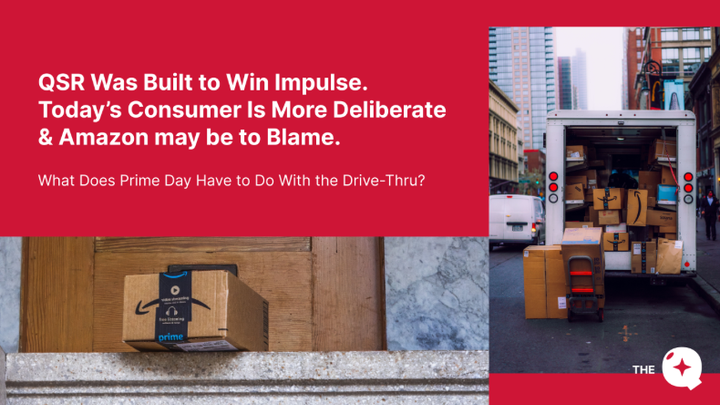
QSR and Amazon used to operate on almost opposite buying behaviors. Fast food was built for impulse: you’re driving, you’re hungry, you see the sign, you pull in. Amazon was where you went when you already knew what you wanted. Find the thing, order the thing, wait several days for it to show up.
Twenty years later, that distinction is getting pretty blurry.
We now plan fast food orders through apps, check offers, collect points and order ahead before we ever get near the restaurant. Meanwhile, people are throwing protein shakes, hydration packets, groceries and other everyday purchases into an Amazon cart and getting them delivered the same day.
Prime Day made that shift especially hard to ignore. This year, 69% of items purchased cost less than $20, while average order value and average household spend both fell. More than half of shoppers compared prices across retailers, and nearly half bought something they’d already been waiting to purchase once it went on sale.
That’s a pretty different picture from the old “Christmas in July” version of Prime Day. People are using a massive shopping event to optimize purchases they were probably going to make anyway.
And that got us thinking about QSR. Because if customers are getting more deliberate about everyday spending, what does that mean for an industry that has historically been really, really good at winning the impulse?
So We Have Our Theory: The Impulse Purchase Is Losing Ground
As people plan more, compare prices and wait for deals, spontaneous purchases might be getting harder to win. But does that purchasing behavior automatically transfer to the drive-thru? We went looking.
First question: How much has QSR historically depended on impulse in the first place?
Turns out, quite a bit.
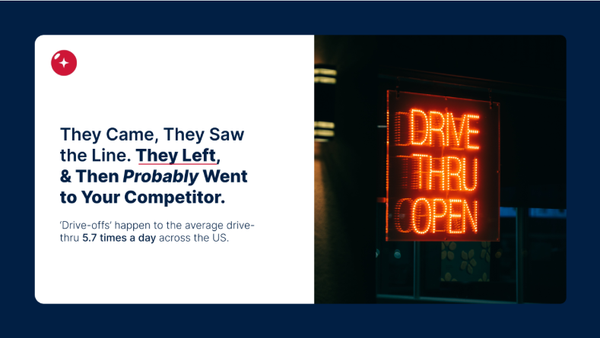
A QSR Magazine piece from 2016 cited research finding that 58% of limited-service restaurant visits were impulsive. Former Firehouse Subs CEO Don Fox made the same point a few years later in a way that feels especially relevant here: ‘someone can decide they want your restaurant, see eight cars in the drive-thru, and immediately choose the competitor across the street instead.’
That’s an interesting kind of impulse because the restaurant hasn’t really won anything until the transaction happens. The customer can change their mind right up until the last second.
So then we had another question: if people really are becoming more deliberate shoppers, are we seeing evidence of that same behavior around food?
And this is where things started getting interesting.
Somewhere along the way, Amazon became a pretty serious food destination. Its grocery business generated more than $150 billion in gross sales in 2025, and now it’s putting fresh groceries right inside Same-Day Delivery. So the milk, produce or meat you need can show up alongside the phone charger you actually opened Amazon to buy. And people are using it.
Amazon says perishable sales through Same-Day Delivery grew 40x year over year. By Q2 2026, the number of customers buying perishables each month was already up more than 50% since the beginning of the year. Customers who add perishables to those orders also buy more than three times as many items on average.
That last part is what got us.
Because you don’t necessarily have to sit down and decide, “I’m going grocery shopping on Amazon today.” You were already there. The food was there. It could be at your house in a few hours. So you added it.
Which sounds pretty impulsive. So maybe our original theory needs a little work. Maybe consumers aren’t simply becoming less impulsive. Maybe they’re getting more selective about where impulse is easiest.
Wait. So Are We Planning More or Less?
Apparently, both.
Because while Amazon is making it ridiculously easy to add food to an order on a whim, the Prime Day data shows shoppers doing a whole lot of planning on the other side.
Nearly half of Prime Day shoppers bought something they had already been waiting to purchase once it went on sale. More than half compared prices across retailers. And 73% shopped or planned to shop another retailer’s summer sale.
That’s not exactly mindless impulse buying. That’s knowing what you want, waiting for the right moment and checking whether someone else will give you a better deal.
And QSR has built plenty of that behavior into food, too.
Restaurant apps let us check the deal before deciding where to go. Loyalty programs give us a reason to pick one restaurant over another. Order-ahead means the decision can happen before we ever get in the car.
We can know what we want, what it costs and what we’re getting for free with those 847 points we forgot we had.
So now we have consumers doing two things at once: planning more when there’s a reason to plan, while expecting impulse purchases to be almost frictionless when they don’t. Which honestly feels a lot closer to how we actually buy things now.
And it gives QSR a slightly harder job. Because you’re not just trying to get someone hungry enough to stop anymore. You may be competing for the decision before they leave the house and for the impulse once they’re on the road.
Okay, So Where Did Our Theory Land?
We started with a theory that a more deliberate consumer was becoming a less impulsive consumer.
After digging into it, we don’t think that’s quite right.
The Prime Day data shows people planning, comparing and waiting when there’s a reason to. QSR apps are giving them more ways to do the same thing with food before they ever leave the house. But at the exact same time, Amazon is making it ridiculously easy to act on an impulse and have food at your door within hours.
So the two behaviors aren’t really competing. We’ve just gotten used to being able to do both.
We’ll plan when planning gets us a better price, a reward or exactly what we want. And when we decide we want something right now, we expect that experience to be really, really easy. Which brings us back to QSR. The decision might happen on the couch while someone checks three restaurant apps, or it might happen when they’re hungry and driving past your sign. Either way, the bar is pretty similar: give me a good enough reason to choose you, and don’t make it hard once I do.
So, theory solved? The impulse isn’t disappearing. It just has a lot more competition (as with everything these days).
And now we really want to know if operators are seeing the same thing. Are you seeing order-ahead and app usage take a bigger share of visits, or is the drive-thru still doing most of the work?
Questions This Research Left Us With
We ended up with a few questions we couldn’t totally answer. Here are our notes, because we’d love to know what operators are thinking and seeing.
Is Amazon actually taking meal occasions from restaurants? We know more consumers are buying food through Amazon and Same-Day perishables are growing quickly. We don’t have evidence that those purchases are replacing QSR visits versus replacing grocery trips or simply adding another food channel.
Are QSR visits actually becoming more planned? We’d say yes. Apps, loyalty, offers and order-ahead give customers more ways to plan, but we’d need restaurant-level data showing how digital/order-ahead share has changed to know how much behavior has actually shifted.
Are value deals creating new visits or discounting visits that were already going to happen? Prime Day shoppers increasingly waited to buy things they already wanted once they went on sale. We’d love to know whether the current QSR value wars are producing incremental traffic or mostly influencing where existing demand goes.
Is tolerance for drive-thru friction actually shrinking? Amazon and other platforms keep raising expectations around convenience and immediacy. The connection makes sense, but we’d need longitudinal abandonment/drive-off data to show customers are actually less willing to wait than they used to be.
What does “impulse” even look like in QSR now? We agreed decisions are impulsive to some degree still but where is the line? If someone sees an offer in an app at 3 p.m., orders ahead at 5:15 and picks it up at 5:30, was that a planned visit or an impulse purchase that just happened earlier?