

It’s 12:20pm. You’ve got 10 minutes left on your lunch break.
You pull into your usual fast food spot, and immediately regret it. The drive-thru line is wrapped around the building, spilling into the street. No chance.
So you pivot. You swing into a nearby grocery store. It’s quiet, middle of the day, barely anyone there. You grab the allergy medicine you’ve been meaning to pick up, a pre-made salad or something from the hot bar, and on your way out, a coffee from the Starbucks inside the store.
Five minutes later, you’re back in your car. Lunch handled. Errand done.
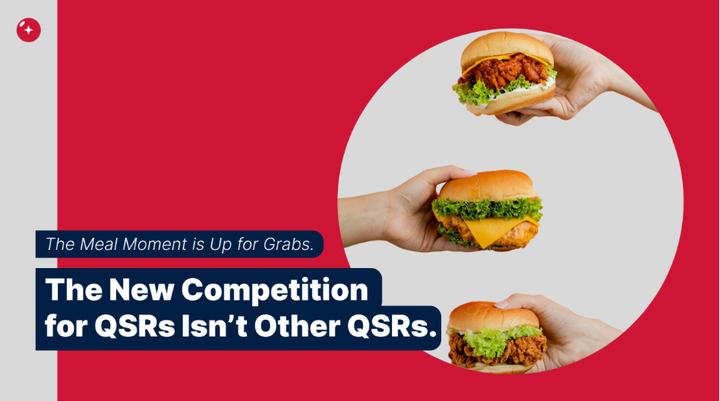
This is what modern QSRs are increasingly up against. For years, restaurants defined competition the same way: other restaurants, same category, same trade area. That model just doesn’t hold up anymore.
Today, a customer deciding what to eat isn’t choosing between two QSR brands. They’re choosing between whatever solves their needs fastest, whether that’s a drive-thru, a gas station kitchen, or a prepared meal from the grocery store.
This isn’t just more competition, it’s the erasing of the old competitive boundaries altogether.
The Data Is Clear: The Competitive Set Has Shifted
The idea that convenience stores and grocery prepared foods are “secondary options” is outdated:
- 72% of consumers now view convenience stores as a viable alternative to QSRs, up from 56% just one year ago.
- 85% of U.S. shoppers have tried made-to-order food at a convenience store.
- Hot food purchases at c-stores jumped from 29% to 35% of transactions in a single year.
- 79% of customers now frequently buy made-to-order items like sandwiches and wraps from c-stores.
- 24% of consumers say they’re buying more prepared grocery meals.
At the same time, most consumers aren’t planning to increase restaurant visits, and price sensitivity continues to rise, with many customers experiencing fast food fatigue.
Put simply: demand isn’t disappearing, it’s redistributing.
This Isn’t a Category Fight Anymore
Restaurants used to compete on menu, brand, and location. Now they’re competing on something more fundamental: who can solve the meal moment fastest and most conveniently.
A customer leaving work at 6:30pm isn’t thinking “Do I want QSR or grocery?” They’re thinking “What’s the fastest way I can eat without compromising too much?”
And increasingly, the answer isn’t always a restaurant.
Why Convenience Stores and Grocery Are Closing the Gap
This isn’t accidental. These formats are actively evolving by choice.
Convenience stores, in particular, are investing heavily in foodservice: expanding made-to-order kitchens, improving food quality and consistency, reducing wait times through simplified operations, and offering competitive pricing against traditional fast food.
Grocery stores are doing the same from a different angle: scaling prepared meal programs, positioning around freshness and perceived value, and capturing customers already in-store.
Neither is trying to become a restaurant. They’re just getting better at solving the same problem.
The Pressure on QSRs Is Structural
This shift lands at a time when restaurants are already under strain. Food and labor costs can account for nearly 70% of total expenses. The U.S. restaurant industry may reach $1.55 trillion in sales, but growth is uneven. Traffic isn’t guaranteed, and in many cases, it’s flat or declining.
That means winning isn’t about expanding demand. It’s about capturing the moments that already exist.
“The real risk for QSR operators is not seeing the problem clearly.” - Rob Green, VP of Revenue, Berry AI
Most operators still exclusively measure performance against the same benchmarks: speed of service vs. last year, throughput vs. internal targets, labor vs. schedule.
But customers aren’t just comparing you to your past performance. They’re comparing you to whatever option is easiest at that moment. If a convenience store can get someone in and out faster, or a grocery store can eliminate the wait entirely, that becomes the new standard, whether you’re tracking it or not.
Winning the Meal Moment
The brands that win this shift won’t be the ones with the biggest menus or the most locations. They’ll be the ones that remove friction from the experience, deliver consistent speed across every shift, and make operational decisions in real time, not after the fact.
Because the new competition isn’t about who’s better on paper. It’s about who shows up best in the moment that matters.
Here are three questions operators can ask themselves to see where they stack up in winning the meal moment:
- What is the average total time someone spends waiting in my lines until they get their food? Not just from when they order, but from when they first get into line?
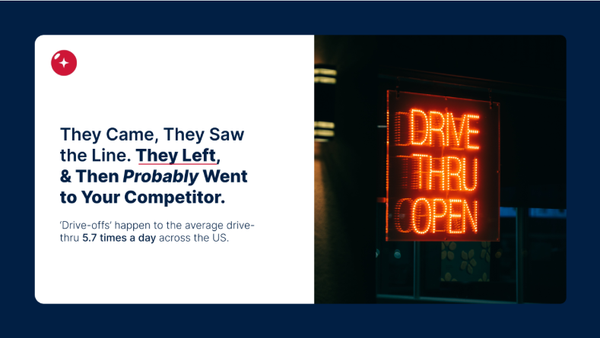
- Do I currently know how many people pull out of my lines each day before they even get to the menu board?
- Do I clearly know two operational adjustments I can make to reduce the number of drive-offs I experience per day?