

Last week, ConsumerAffairs asked a question a lot of restaurant operators are asking right now: why are so many restaurant chains closing locations?
It’s a fair question.
Over the past year, we’ve seen closure announcements from brands including Wendy’s, Pizza Hut, and Jack in the Box. Most explanations point to familiar pressures: inflation, labor costs, food costs, transportation expenses, and increasingly selective consumers.
Most reporting stops there.
If inflation alone were determining outcomes, we’d expect restaurants to be struggling in roughly the same ways. Instead, we’re seeing a very different reality. Some operators are closing locations. Others are investing in growth, opening new stores, and continuing to gain market share.
That raises a more interesting question: if everyone is operating in the same economic environment, why are some restaurants succeeding while others are struggling?
Our CEO, Eric Lam, offered a take: “For years, operators could cover thin unit economics with promotions to increase traffic and price increases. Both of those are tapped out now. What’s left is operational efficiency.”
At first glance, that sounds like a statement about restaurant operations. It’s actually a statement about restaurant economics.
For years, operators had multiple ways to offset inefficiencies. If food costs increased, prices could rise. If traffic slowed, promotions could help bring guests back. If sales softened, a limited-time offer could create a temporary lift.
Those tools helped create a buffer between operational performance and financial performance. Today, that buffer is shrinking. Which brings us to the real issue.
The Margin Cushion Is Gone
Operators have fewer ways to hide operational inefficiencies.
Those levers still exist, but they’re becoming less effective. Consumers are more price sensitive, discounting comes at the expense of profitability, and competition continues to intensify across the industry. At the same time, operators are being asked to deliver faster service, more customization, stronger digital experiences, and greater consistency than ever before.
As a result, operational inefficiencies that once felt manageable are becoming much harder to absorb. We’re already seeing signs of that. Wendy’s continues to invest in new restaurant development and modernization initiatives, while simultaneously closing weaker locations.
The goal isn’t simply to operate fewer restaurants. It’s to improve the economics of the restaurants that remain.
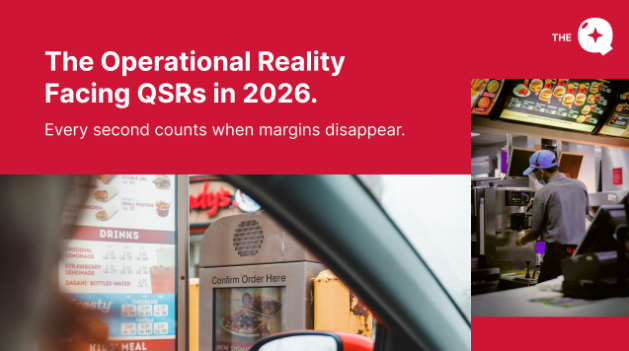
That’s a challenge facing operators across the industry. Every location has to work harder than it did five or ten years ago, and a slightly inefficient operation that might have been survivable in 2015 can become a meaningful profitability problem in 2026.
The industry didn’t suddenly become less profitable. It became more demanding for operational precision.
Not Every Operational Problem Shows Up on a P&L
The biggest challenges are often hidden inside daily execution.
When a location closes, it’s easy to blame those headline issues we discussed: labor, inflation, food costs.
What’s harder to see are the dozens of small operational breakdowns that happen every day inside a restaurant:
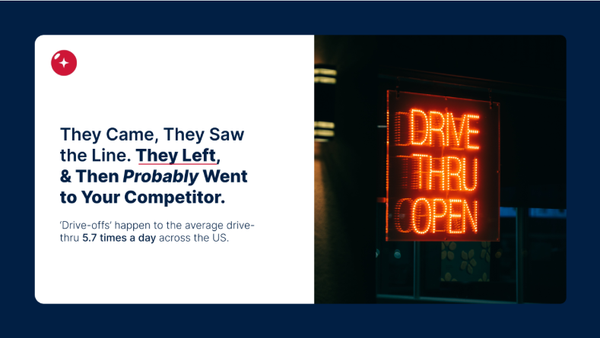
- A drive-thru lane that slows down during lunch.
- A recurring bottleneck between ordering and fulfillment.
- Teams spending too much time reacting to problems instead of preventing them.
- Managers making staffing decisions without a clear understanding of where throughput is actually being lost.
None of these issues are dramatic on their own. But restaurant profitability rarely disappears all at once. More often, it erodes through many small inefficiencies that compound over time.
A few extra seconds per vehicle. A few missed opportunities during peak periods. A few recurring delays that never get fully addressed.
Individually, they seem insignificant. Collectively, they can determine whether a location is thriving or struggling.
The Difference Between Knowing and Seeing
Most operators know there’s a problem. The challenge is identifying where it starts.
One of the most common conversations we have with operators isn’t about technology, it’s about visibility. Managers often know something isn’t working.
They can see drive-thru times increasing. They can see guest satisfaction slipping. They can feel the operation becoming harder to manage.
What they can’t always see is why.
Where is the bottleneck occurring? Which locations are consistently outperforming others? What operational behaviors separate the best-performing stores from the average ones? What happens differently during peak periods?
Without visibility, operators are often left relying on assumptions, anecdotal feedback, or reports that arrive long after the opportunity to fix the issue has passed.
That’s becoming increasingly difficult in an environment where margins leave very little room for error. Today’s restaurants are managing mobile orders, loyalty programs, delivery platforms, larger menus, increased customization, staffing challenges, and rising guest expectations simultaneously.
The operators performing best in that environment are often the ones with the clearest understanding of what’s actually happening inside their operation. They identify problems sooner. They respond faster. They understand where execution is breaking down before guests notice it. And instinct and experience are no longer sufficient to drive these best practices. Objective data is required.
That’s not just an operational advantage anymore. It’s becoming a financial one.
The Future Belongs to Operators Who Can See
Execution is becoming the deciding factor.
The restaurant industry’s economic challenges aren’t going away anytime soon. Labor will remain expensive, food costs will fluctuate, and consumers will continue to demand more value for their money.
But those realities affect everyone. What separates the operators who thrive from the operators who struggle is increasingly their ability to execute consistently despite those pressures.
The next era of QSR won’t be won by the brands with the deepest discounts or the biggest promotions. It will be won by the brands that can identify inefficiencies, solve problems quickly, and make better operational decisions every day. And objective visibility into the customer journey is the foundation.
The era of operational “fluff” is over. For operators, visibility is no longer a nice-to-have. It’s becoming a prerequisite for growth.